

I'm Trying Here!
Effort, uncertainty, and what we keep as proof we're doing enough

I wasn’t expecting to ugly cry while clearing out my medicine drawer.
In the days before flying home for the offseason, I siphoned my last ounce of spring cleaning motivation and confronted the kitchen drawer I’d been avoiding for longer than I’d care to admit.
That particular drawer may as well have had a “don’t touch” sign plastered across it. Aside from the front row, home to the small handful of supplements I actually reach for, the remaining space looked I had been personally funding the supplement industry for years. Half-used bottles. Long-expired prescriptions. Protocols I didn’t fully remember starting or ending, but apparently couldn’t bring myself to throw away.
A couple years ago, after months of following a particularly brutal protocol, I remember telling my therapist that opening the drawer made me want to gag. I just couldn’t swallow another pill.
I went through many cycles like this. Bringing half a suitcase of pill bottles wherever I traveled, then hitting a wall and questioning everything.
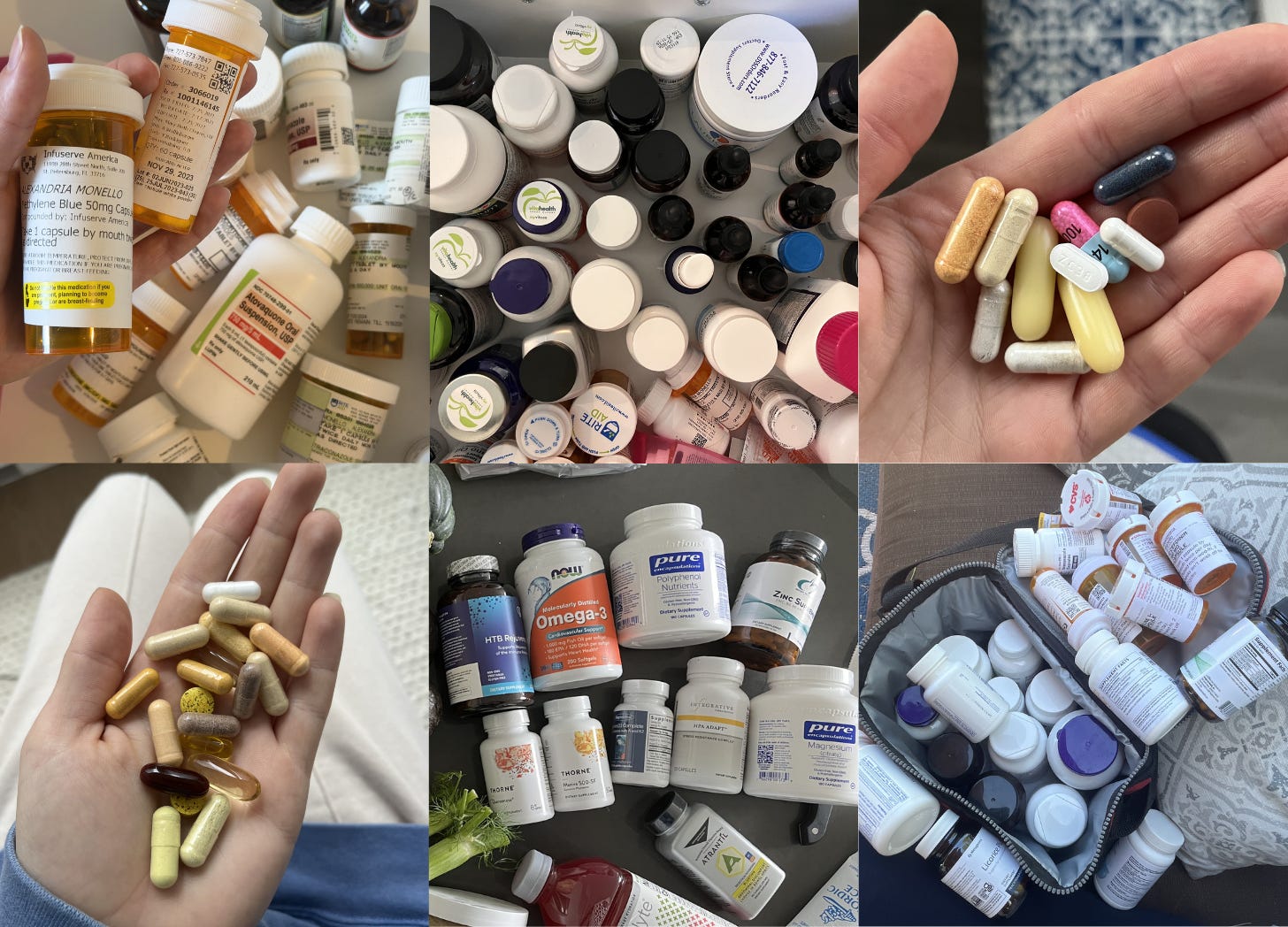
Over the last few years, a lot has shifted in my relationship to healing. Certain supplements and medications may always be part of my toolbox, but they are no longer so central to my life. The exhausting search for the illusory “silver bullet” — the pill or powder or protocol that would finally fix everything — has slowly abated.
Standing in front of that overflowing drawer, I thought: this will be easy. There was no point letting the clutter collect dust for another summer.
So I started pulling bottles out one by one.
The counter quickly filled with capsules, powders, and prescriptions attached to entire eras of my life. And then, unexpectedly, grief. My chest grew heavier with each expired bottle I held over the trash can. I hesitated before letting them go, even though most had long since lost their potency or relevance.
Standing there with tears streaming down my face, it felt less like I was cleaning up and more like I was walking through a museum of every version of me that had tried so hard to feel better.
Objects as evidence
A few weeks have passed and it’s clear the visceral response I experienced was never really about the 3-year old anti-malarial drugs.
It was about what they represented: hope, fear, effort, money, identity, time.
The bottles, pills, and tinctures were all evidence.
Evidence that different versions of me existed. Evidence that I tried. Evidence of hope, desperation, dead ends, and moments I believed something might finally shift. Evidence of how hard I worked to create certainty where there often wasn’t any.
Despite logic, throwing these bottles away felt like I was invalidating everything they represented.
There was so much uncertainty attached to every bottle. Uncertainty about starting them, stopping them, and whether I could truly trust my own sense of direction without them.
Why do we attach so much meaning to objects like these?
I know this isn’t unique to illness. Most of us keep things tied to former versions of ourselves. Clothes we might return to. Letters we can’t let go of. Objects connected to relationships, identities, or futures we once imagined for ourselves.
I think, sometimes, we keep these things because they make uncertainty feel easier to sit with.
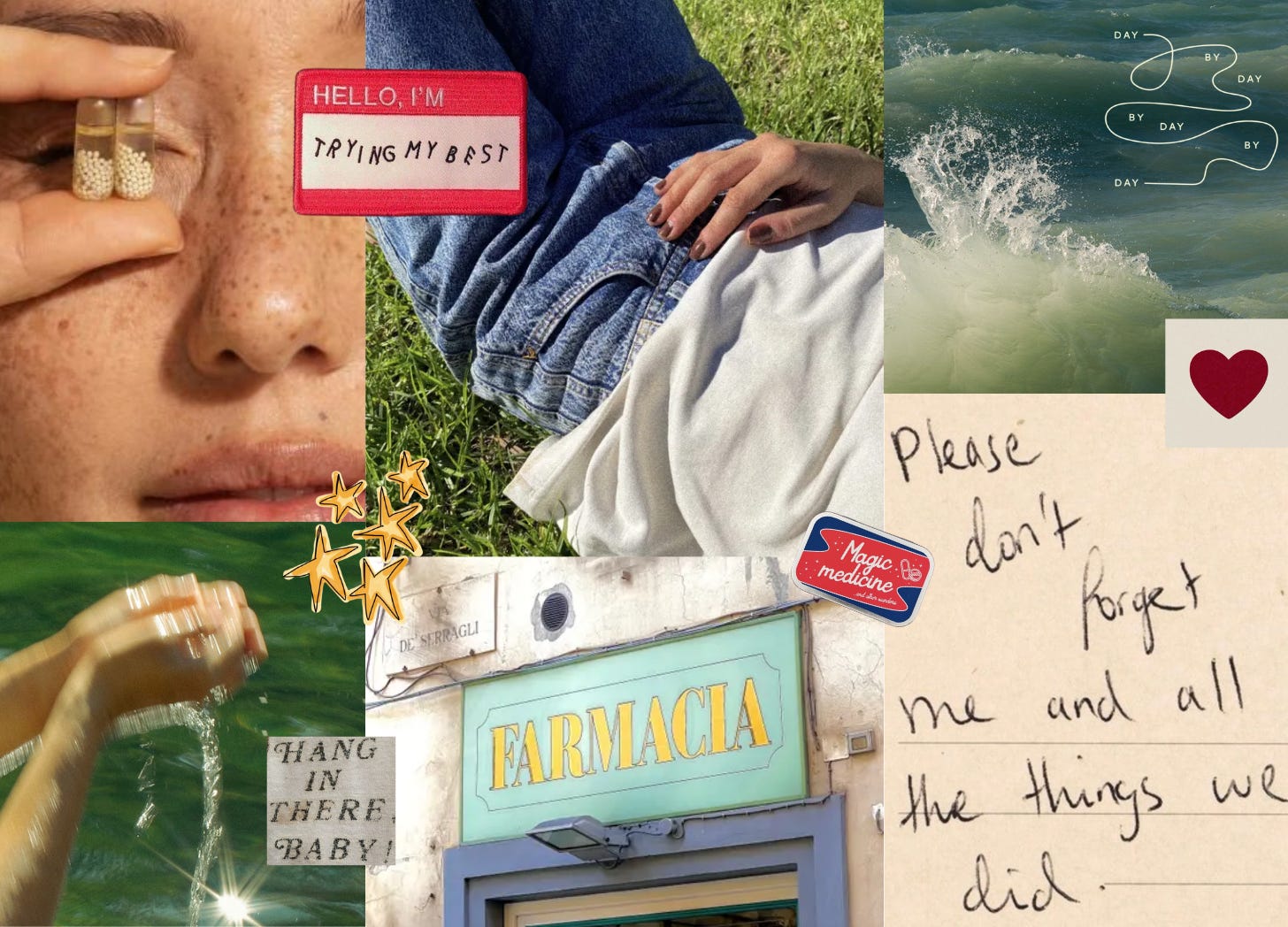
Clearing out the drawer forced me to confront the emotional weight I still attach to trying.
In my experience with chronic illness, there have been very few clean endings. Very few moments of absolute clarity. Very few times where someone has confidently said: this worked, you can stop now. The transitions have been much blurrier than that. Protocols tapering off instead of ending. Symptoms becoming more manageable but not disappearing. Decisions revisited more than resolved.
Over time, I’ve had to become the person synthesizing everything: doctors, practitioners, research, intuition, lived experience. There is freedom in being your own case manager, but there is also fear. Because once you become responsible for navigating your body, it can be hard to know the difference between attentiveness and hypervigilance.
Cleaning out the drawer put a spotlight on that tension. The bottles weren’t just reminders of symptoms or protocols. They were physical evidence that I was still paying attention. Still searching. Still trying to stay ahead of whatever might come next.
Despite how much my relationship to healing has changed, I realized some part of me still associates “trying” with safety.
And to be clear, I don’t think that is entirely wrong. Caring for myself matters. Support matters. “Trying” is not the problem, but I no longer believe that it only counts when it looks like hypervigilance. And still, loosening my grip can feel emotionally complicated.
Throwing the bottles away brought up an uncomfortable question: In loosening my grip, am I trusting my body more… or simply paying less attention?
That question feels especially loaded in the context of chronic illness, where the line between acceptance and apathy can sometimes feel nonexistent.
Each bottle represented a version of me trying to navigate uncertainty with the information and capacity I had at the time. Letting them go meant sitting with the reality that there are some questions I may never resolve with complete certainty.
I still don’t know exactly where the line is between acceptance and resignation. Maybe it shifts constantly. Maybe living in a body means learning to tolerate ambiguity instead of solving it.
But I do know that standing in my kitchen that morning, with the drawer open and the counter covered in fragments of old versions of myself, I wasn’t really grieving the bottles. I was grieving how hard those versions of me had tried to create safety, certainty, and relief.
Letting go of them didn’t erase any of that. It just meant I no longer needed the evidence sitting in my drawer.
❤️
PREACH!!!!!🙌🏻